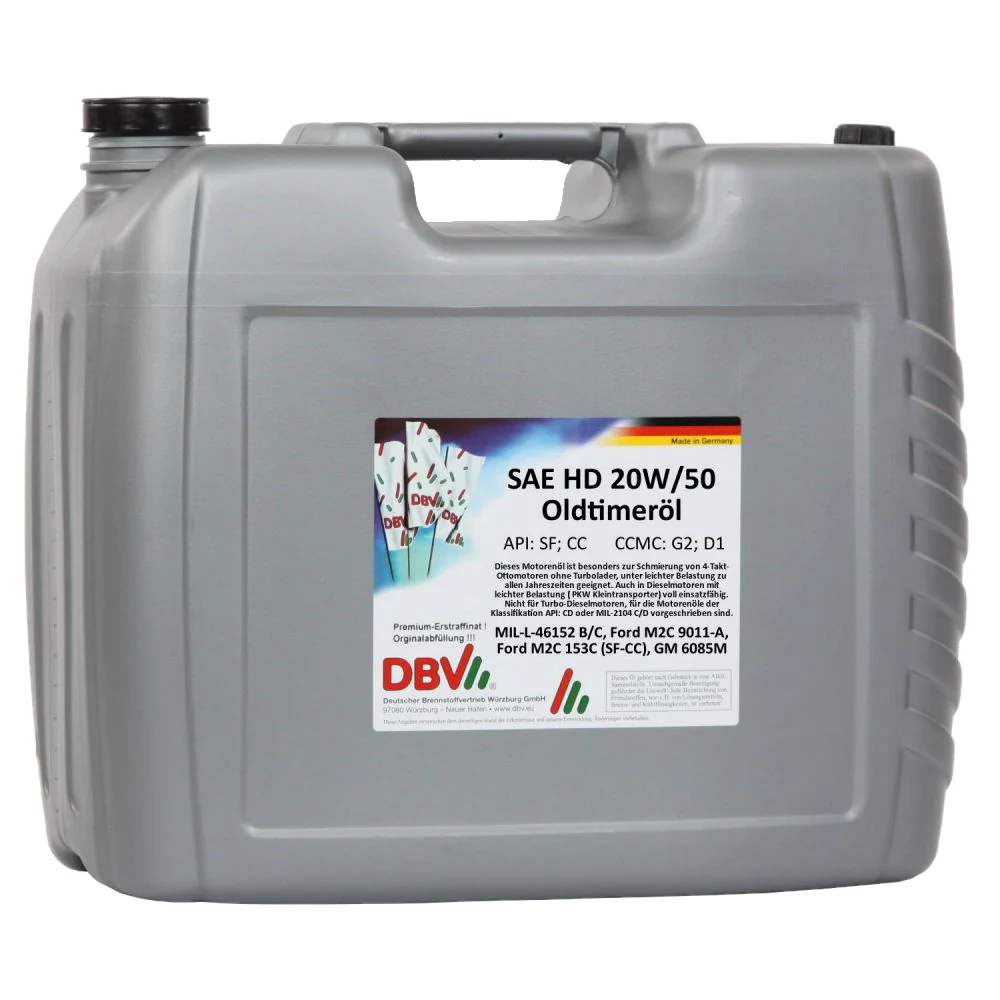
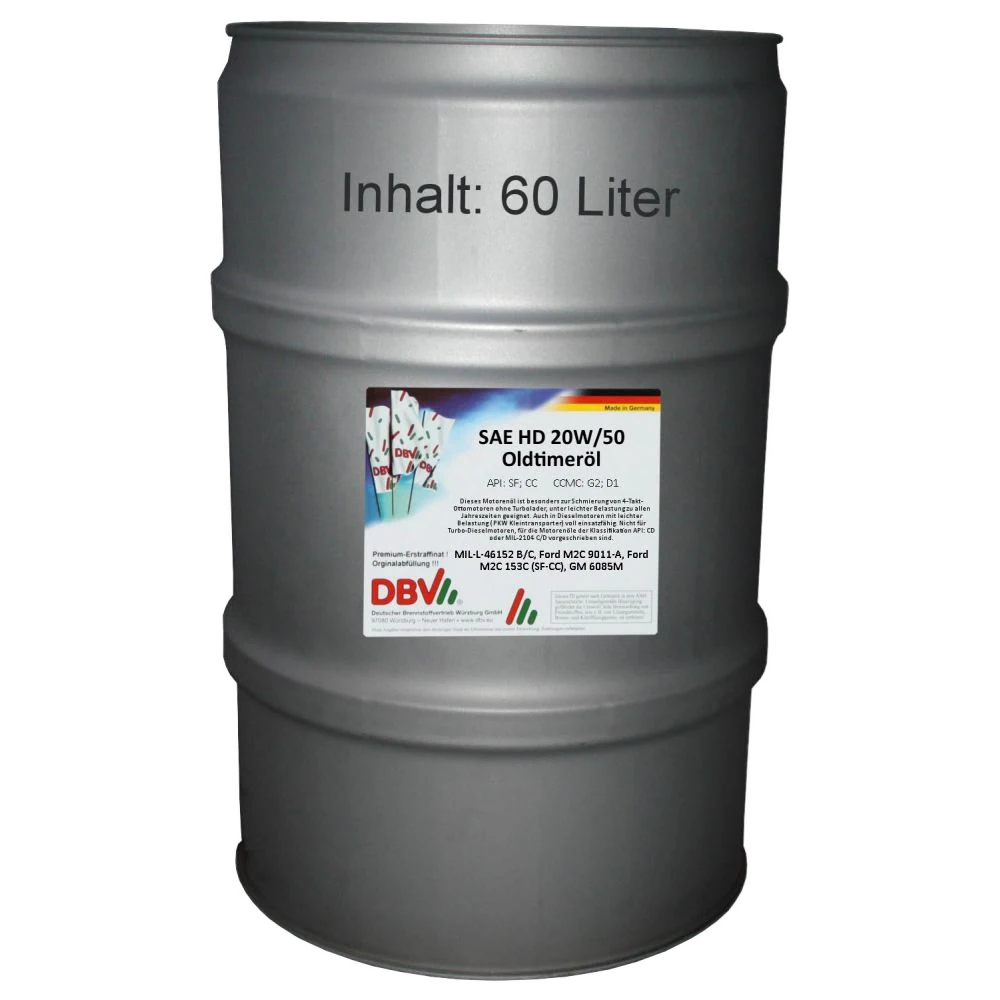
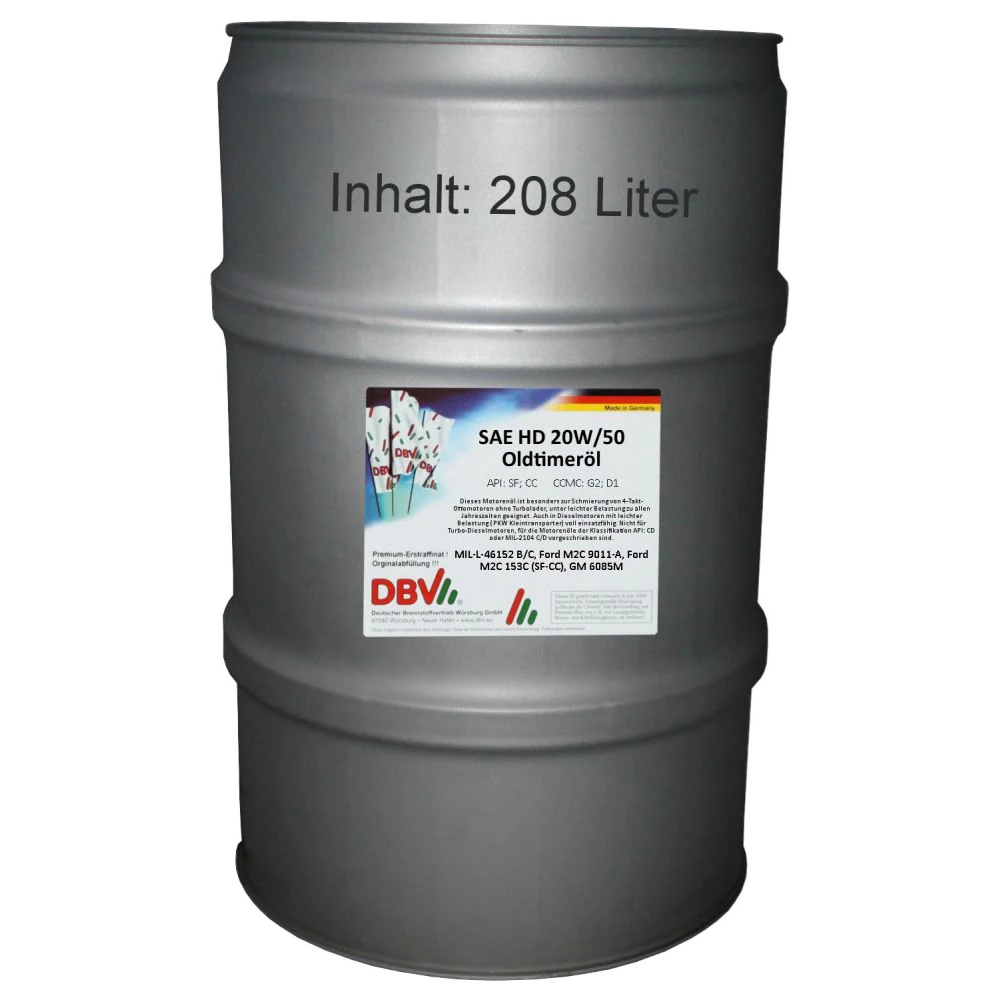
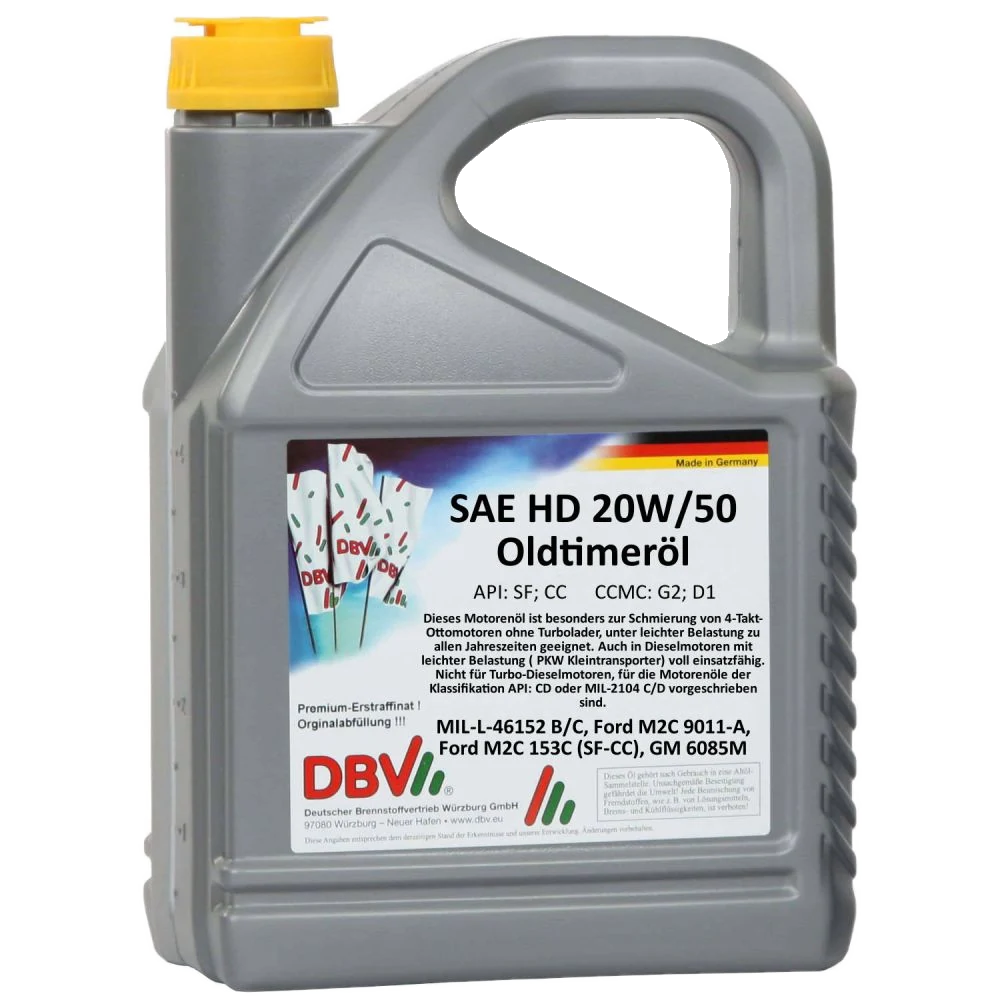
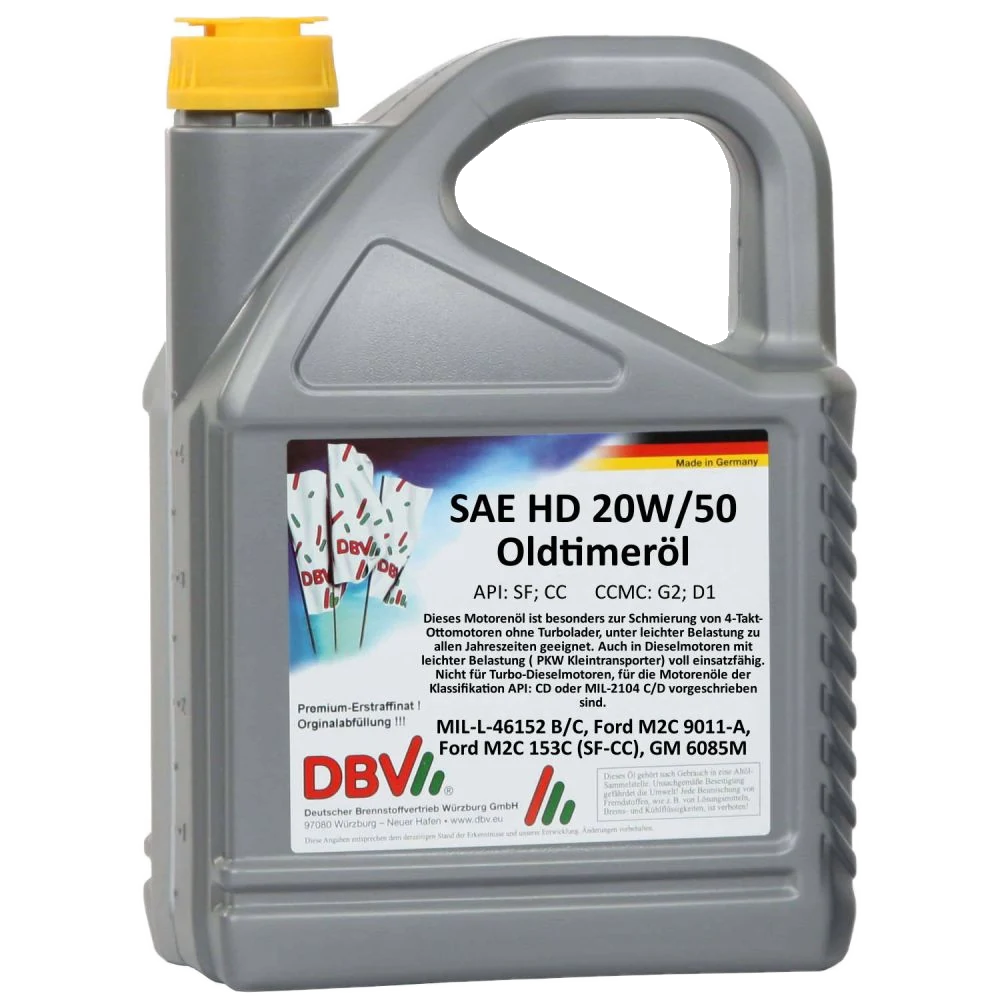
20W-50 HD SAE classic car oil is a classic car engine oil in the Classic car oils category. It is intended for classic vehicles, older engine concepts and collectors' cars with traditional lubrication requirements when the technical requirement matches the data sheet and the vehicle, machine or equipment documentation. The visible grade/profile is 20W-50.
The decisive point is not the product name alone, but the full requirement profile: engine era, seal compatibility, viscosity recommendation, API level and how the vehicle is driven. This localized page therefore keeps the same technical basis as the German shop entry and explains the product in English without shortening the selection notes.
Before ordering, compare the required approval, standard or viscosity with the product data, the PDF documents and the manufacturer's instructions. This is especially important when products have similar SAE, ISO, DOT or ATF labels but different additive packages or approval profiles.
Applications
Use 20W-50 HD SAE classic car oil only for applications where the required specification matches. In practice this means checking the vehicle manual, service plan, machine documentation or workshop instruction before using the product for filling, topping up or conversion.
Benefits in use
- mineral classic-car profiles for older engine generations
- orientation for vehicles that should not be filled with modern low-viscosity oils without checking
- suitable for seasonal use, careful warm-up and collector maintenance
- helps keep the selection close to traditional operating concepts
- clear guidance for viscosity and approval comparison
Approval and specification profile
- Grade or visible profile: 20W-50
- Category: Classic car oils
- Base oil technology: mineral
- Quality-equivalent to: API SF/CD, CCMC D2/G2, MIL-L-2104D
- Important standards and approvals: minerales Mehrbereichsöl gemäß API SF/CC. CCMC G2/D1. MIL-46152B/C. Für Fahrzeuge von damals, als unsere Großmütter noch zur Schule gingen, mineral, API SF/CD, CCMC D2/G2, MIL-L-2104D
Available package sizes
- 5.000 L - 5-litre canister
- 20.000 L - 20-litre canister
- 60.000 L - 60-litre drum
- 208.000 L - 208-litre drum
FAQ zu 20W-50 HD SAE Oldtimeröl
Can I use 20W-50 HD SAE classic car oil just because the viscosity looks right?
No. The grade is only one part of the selection. The approval and standard profile must match the exact application.
Where can I check the detailed technical data?
The product page links the available PDF documents. Use them together with the manufacturer's documentation before filling or switching products.
Are the package sizes and prices the same as on the German page?
Yes. The localized page uses the same live product, variant, price and document data; only the explanatory content is localized.
Typical technical values
| Property | Method | Unit | Value |
|---|
| Density at 15 °C | ASTM D-7042 | g/ml | 0.89 |
| Kinematic viscosity KV 100 | ASTM D-7042 | mm²/s | 18,9 |
| Kinematic viscosity KV 40 | ASTM D-7042 | mm²/s | 154,8 |
| Viscosity index | ASTM D2270 | - | 139 |
| Flash point | ASTM D-92/DIN EN ISO 2592 | °C | 254 |
| Pour point | ASTM D-97/DIN EN ISO 3016 | °C | -25 |
| CCS | ASTM D-5293 | cP @ °C | 4600 @ -15 |
| Total base number | DIN 51639-1 | mgKOH/g | 8,7 |
Storage notes
Packages of all types should preferably be stored under cover. If products are stored outdoors without cover, packages should be stored horizontally to prevent water ingress and keep labels readable. Products should not be stored at temperatures above 60 °C. Protect them from direct sunlight and frost.